

November 9th, 2026
To Wire or Not to Wire?
Not every announcement needs a syndicated distribution network
To wire the news, or let it find its way?
When stakes are high, the word must travel far.
But smaller tales may reach the hearts they seek,
Without a thousand echoes from afar.
Having given Shakespeare his moment, we’ll now abandon iambic pentameter, and try to forget high school English, and return to plain English. Not every announcement needs conventional syndication to hundreds of online news outlets. The decision should depend on the significance of the news, who needs to see it and what the organization hopes to achieve—not the assumption that every release requires syndicated distribution.
Six questions to ask before you wire
1. Are you public or private?
Public companies have disclosure obligations that private companies generally do not. Material information may require broad, non-exclusionary dissemination, appropriate SEC filings and consideration of exchange requirements. A conventional wire is one established channel, but not the only method potentially consistent with Regulation FD. Legal counsel and established disclosure policies should guide that determination. A routine, nonmaterial announcement from a public company does not automatically call for the same distribution as earnings or a transformative transaction.
Private companies can often be more selective, choosing publication and outreach channels that correspond to their customers, investors, partners and other stakeholders.
2. Is the announcement significant—or routine?
A financing, acquisition, licensing agreement, meaningful clinical milestone or major strategic partnership may warrant broad distribution. Such developments can be relevant to investors and industry observers who are not yet in the company’s network.
By contrast, attending a conference, speaking on a panel or exhibiting at a trade show can be worthwhile news without necessarily justifying a national wire. A branded release and direct outreach to attendees, relevant reporters and customers may be sufficient. Publishing an announcement and purchasing syndication are separate decisions.
3. Are you measuring value—or collecting vanity metrics?
Hundreds of syndicated placements and an enormous potential audience can look impressive in a presentation to a boss or client. But placement counts are not the same as confirmed readership. Potential reach is not actual engagement.
Syndication still has legitimate benefits, including downstream availability and potential discovery. The question is whether those benefits align with the announcement’s objective. If the goal is to reach a narrow professional audience, a smaller number of relevant readers may deliver greater value than hundreds of pages carrying the same release.
A communications team should be comfortable explaining why quality of audience, meaningful engagement and measurable results sometimes matter more than quantity of placements.
4. Does the news need to enter an industry's permanent record?
Some announcements are important because databases, investors, researchers and deal professionals may need to find them years later. Financings, strategic deals, acquisitions and clinical development milestones often fit that description. Conventional wires may increase the opportunity for database ingestion and broad industry discovery, although no provider can guarantee coverage by every database.
For more routine updates, a durable, searchable primary-source page may accomplish the goal. Either way, the organization benefits from an authoritative destination where readers can find the original announcement and supporting materials.
5. Who specifically needs to see it?
An announcement targeting five relevant trade journalists, conference participants or a defined customer segment may benefit more from direct outreach than indiscriminate distribution. Conversely, when an event has broader market relevance, a conventional wire can complement individual pitching. Wire distribution, direct publishing, syndication and earned media coverage are related but distinct activities.
6. Could the distribution budget do more elsewhere?
A company spending heavily on a routine announcement might have greater impact by producing several useful updates during the quarter, improving multimedia presentation, maintaining a company newsroom and engaging targeted audiences. The objective should be effective communications, not the automatic purchase of the broadest package.
Two releases, two different decisions
An example of focused publishing
A release published by a research organization through Reportable illustrates how an announcement can be evaluated through actual audience behavior rather than syndication counts alone. Its reporting dashboard tracks activity at the news release destination. When the intended audience is defined and broad market disclosure is unnecessary, targeted publication may be sufficient.
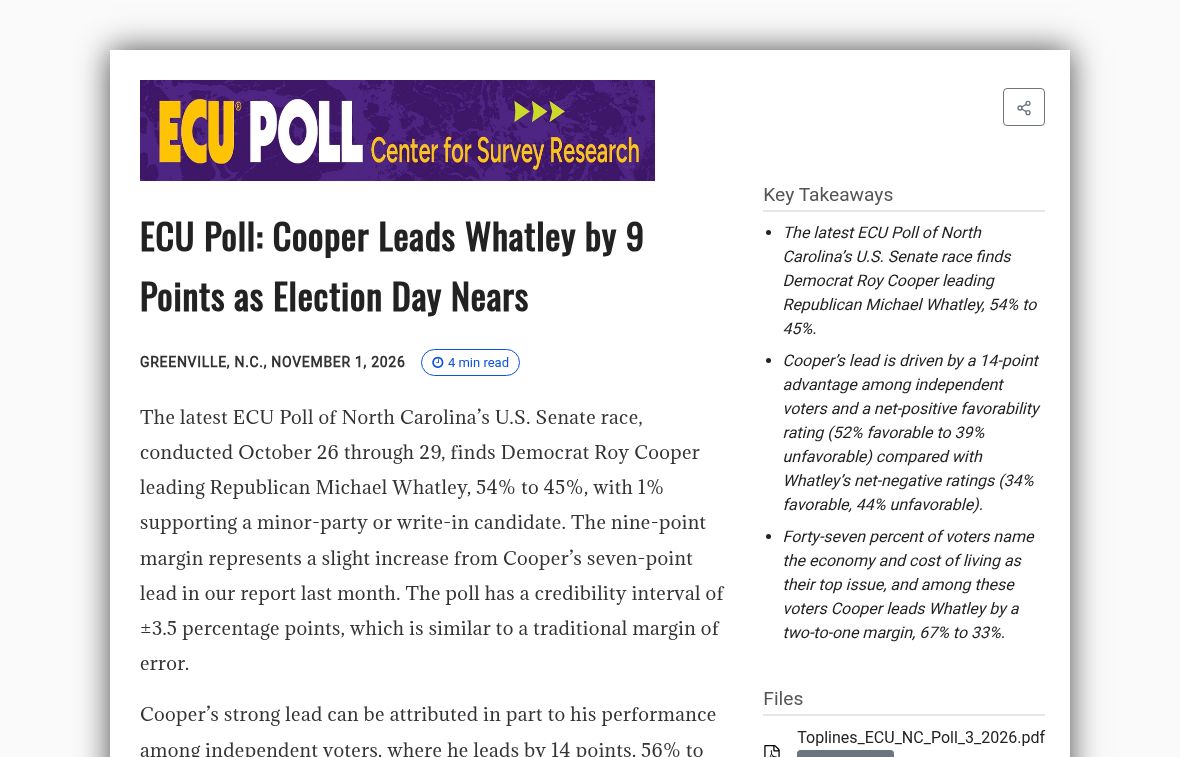
The accompanying example summarizes the categories of analytics available. Identifying details and unverified numbers have been masked. Actual engagement figures should be inserted only after verification.
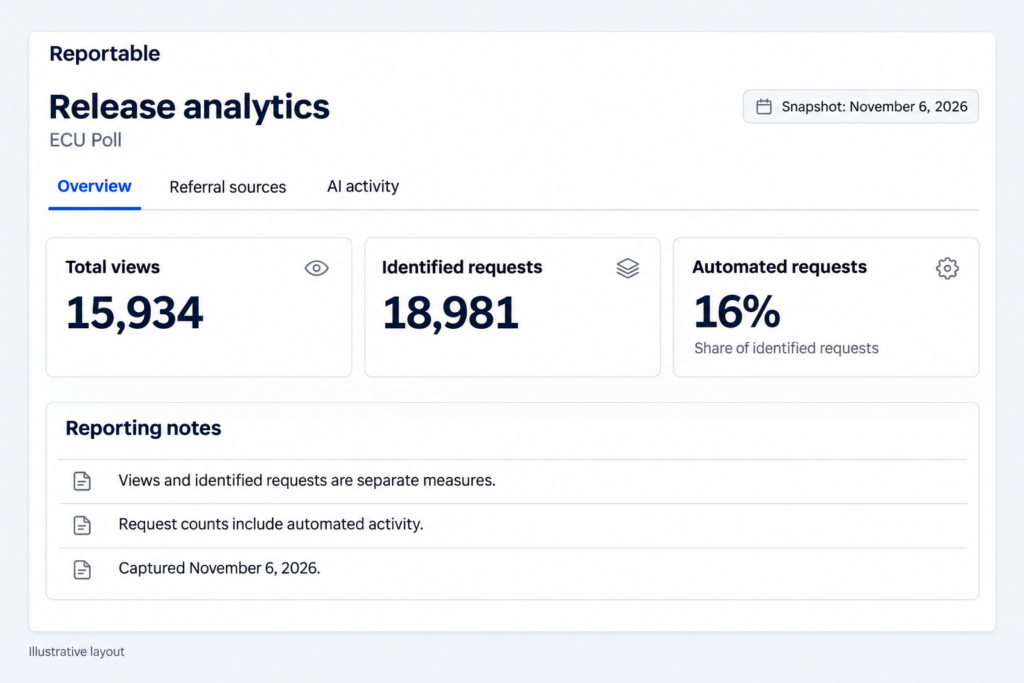
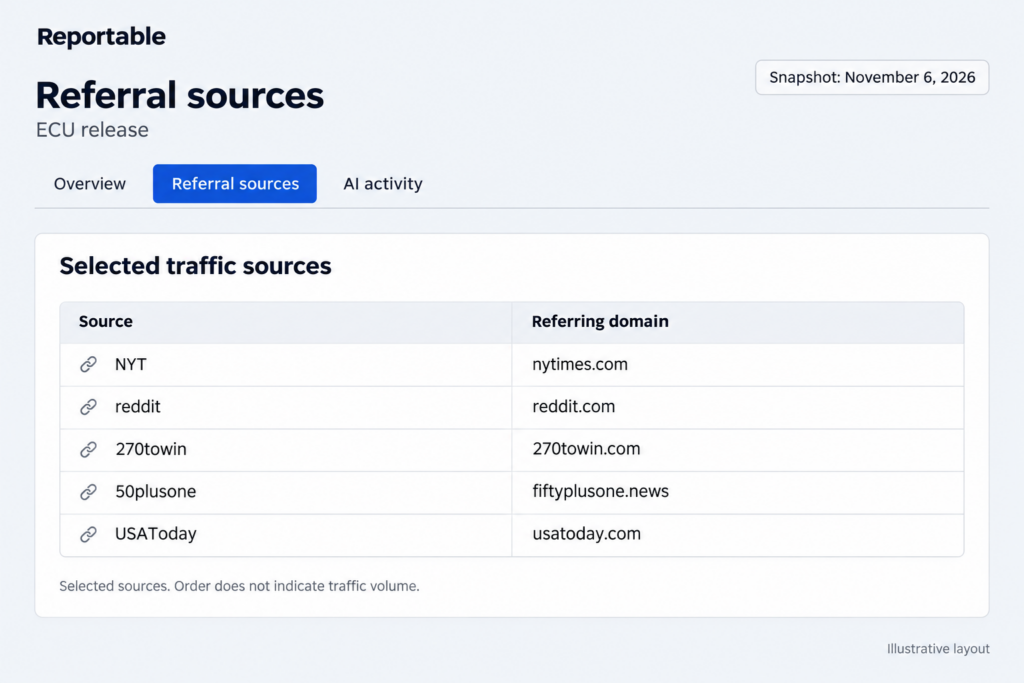
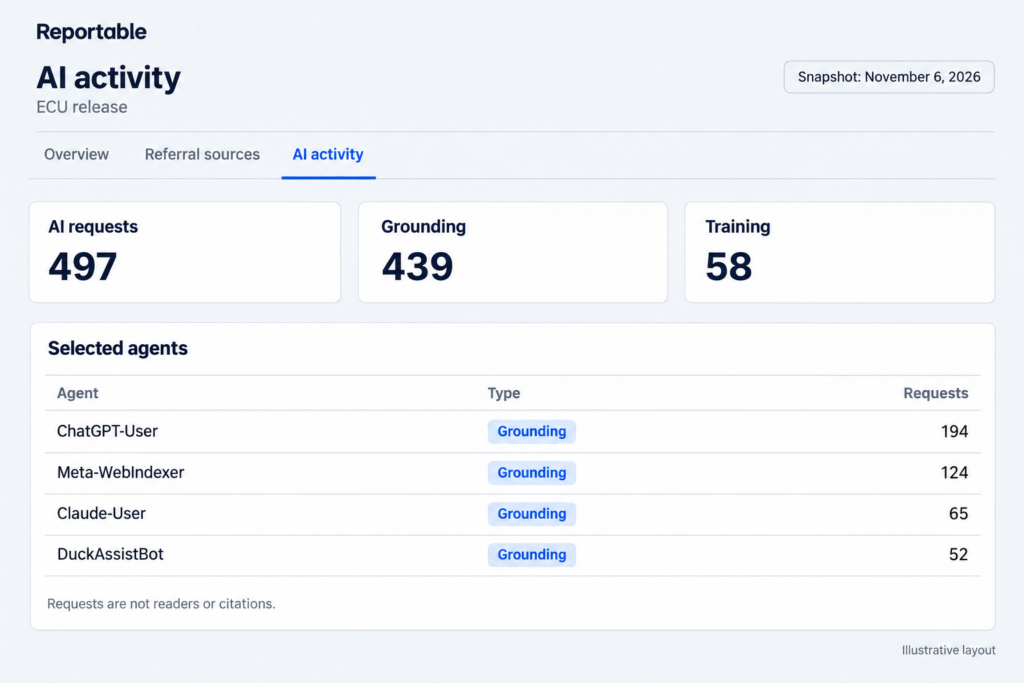
The lesson is not that targeted releases always attract more readers. It is that a release can meet its objectives without buying the largest possible syndicated footprint.
Okogen: a clinical milestone with wider relevance

Consider Okogen’s announcement that it dosed the first patient in the EMERALD trial evaluating Treyegen for acute infectious conjunctivitis. That type of clinical milestone can matter to investors, biotech reporters, potential partners and industry data services. Broader wire distribution is therefore worth considering alongside a branded destination and targeted outreach.
Here, the additional value lies in the chance to reach people beyond the company’s current contacts and make the event easier to discover later. Before publication of this case study, confirm Okogen’s actual distribution route and any documented database pickup.
A better question than 'wire or no wire?'
The real question is which combination of publishing, distribution and outreach best suits the particular announcement. Publishing establishes an accessible original source. Distribution moves the news through selected channels. Syndication creates additional placements. Earned coverage occurs when journalists independently report on the story. None should be confused with the others.
Conventional newswires aren’t obsolete. They simply aren’t necessary for every news release. Evaluate the nature of the news, disclosure requirements, audience, the need for database visibility, available budget and measures of success before choosing a channel.
Reportable enables companies to create modern, multimedia news releases with a branded destination and measurable engagement, while using broader distribution when justified. The goal should never be to distribute as widely as possible. It should be to distribute as effectively as necessary.
Editorial references and verification notes
Anonymous case-study metrics: underlying reporting source retained separately for editorial verification; do not publish the customer’s name or a link to the original announcement.
Okogen release: https://okogen.reportablenews.com/pr/okogen-doses-first-patient-in-emerald-trial-advancing-treyegen-toward-a-new-treatment-approach-for-acute-infectious-conjunctivitis
SEC Regulation FD adopting release: https://www.sec.gov/files/rules/final/33-7881.htm
Prepublication checks: Confirm anonymized case-study metrics and permission to publish; Okogen’s distribution and documented database coverage; and final regulatory language. No unverified traffic figures have been presented.