
May 14th, 2026
Publishing is Only the Beginning:
How to Amplify and Measure a News Release After It's Published
Most teams treat publishing a news release as the finish line. In reality, it’s the beginning of the distribution cycle.
The first 24–72 hours after launch often determine whether a release quietly exists online or becomes a meaningful driver of visibility, engagement, referral traffic, and long-term discoverability.
The most effective communications teams don’t stop after hitting send. They amplify, distribute, measure, and optimize their releases long after they go live.
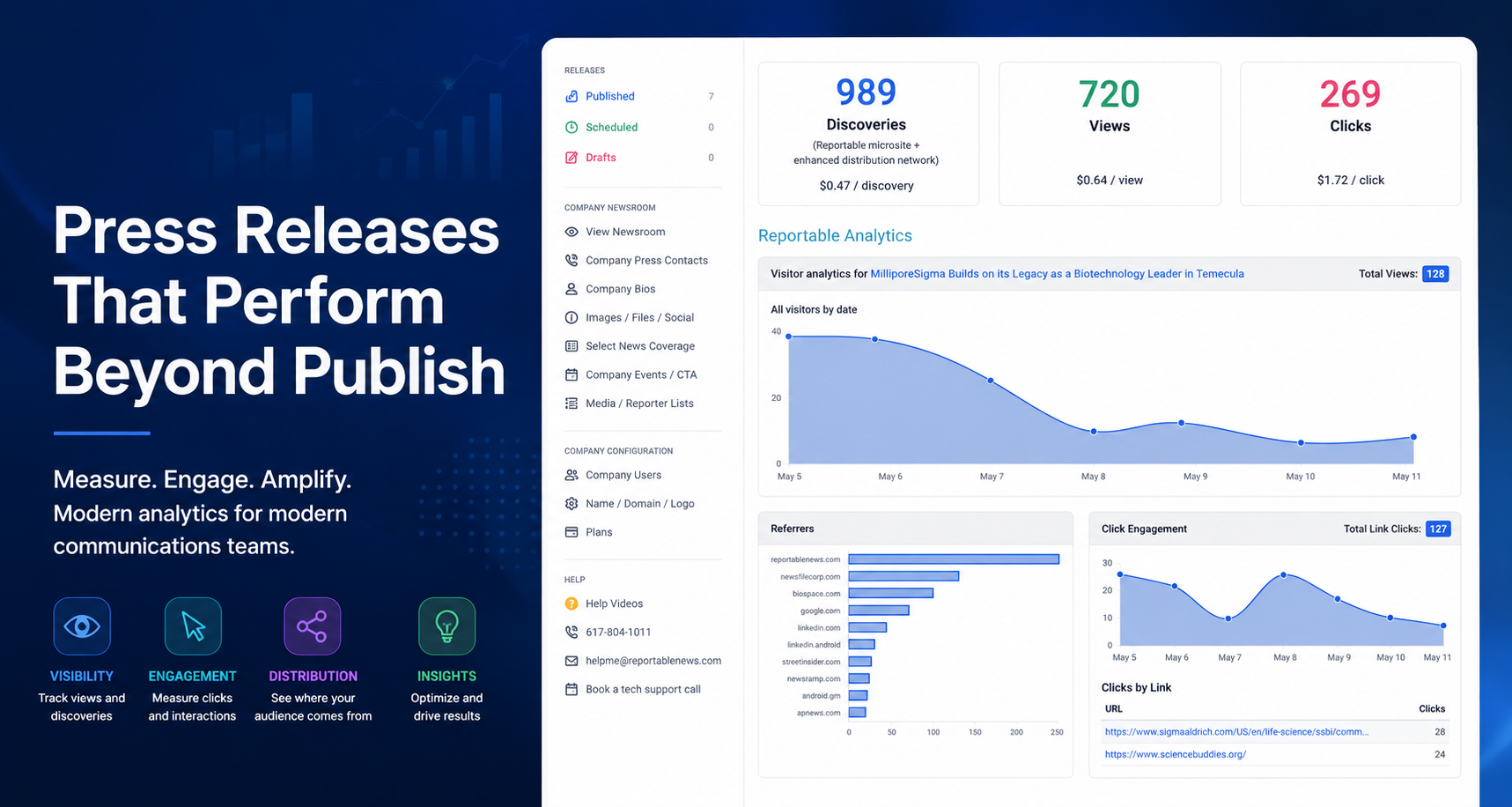
Modern news releases generate measurable engagement across views, clicks, syndication, and discovery channels.
Amplification Creates the Audience
Publishing creates the asset. Amplification creates the audience.
One of the biggest mistakes communications teams make is assuming distribution ends once the release is live. In reality, launch day is where momentum begins.
LinkedIn alone can become a major traffic driver for news releases, especially for B2B organizations. In many campaigns, social sharing can account for 10–20% or more of total release visibility.
But effective amplification requires more than a single company post.
The strongest post-launch strategies activate an entire network:
- Getting it into reporters’ email inboxes (for the right announcements)
- executives sharing commentary on their social media channels,
- employees reposting announcements,
- partners engaging with the content,
- and internal stakeholders helping extend visibility
On platforms like LinkedIn, engagement signals directly influence reach. A release with active reposts, comments, and discussion continues surfacing well beyond the initial publication window.

Referral analytics often reveal that social sharing, syndication, and third-party coverage drive meaningful post-launch visibility.
Share the Official Release URL Internally
To ensure consistency in messaging, maintain accuracy across teams and external partners, and provide a single authoritative source for updates, references, and media coverage, The formal news release URL should become the central version shared across your organization.
Many communications teams maintain internal distribution lists similar to media lists — including:
- leadership teams,
- sales and customer success,
- investors,
- employees,
- partners,
- and brand advocates.
Centralizing traffic around a single release URL improves:
- analytics accuracy,
- attribution,
- SEO value,
- and long-term discoverability.
HOT TIP: Don’t Overlook Industry Newsletter Writers
Some of the most valuable post-publication visibility comes from niche industry newsletters and independent writers publishing highly engaged daily or weekly content.
A mention in a respected industry newsletter can sometimes drive more qualified engagement than broad syndication alone.
Keep a curated list of:
- newsletter editors,
- Substack writers,
- trade publication curators,
- and independent analysts
who regularly cover your space.
Make the Release Easy to Find
A news release should never disappear after launch day.
Every announcement should have a permanent home in your newsroom or media center that is:
- searchable,
- dated,
- time stamped,
- and easy to navigate.
This matters for:
- journalists researching your company,
- investors reviewing activity,
- search visibility,
- and long-term brand credibility.
If your organization manages publishing internally, consider implementing:
- RSS feeds,
- automated newsroom publishing,
- structured metadata,
- and search optimization best practices.
The easier your releases are to find, the more long-term value they continue generating.
Treat Your Release Like a Performance Campaign
Today’s news releases should be measured like performance marketing assets — not static announcements.
Today’s newsroom analytics provide communications teams with far more than pageviews. They offer visibility into audience behavior, referral traffic, engagement patterns, and even downstream action.
Strong communications teams track:
- referral traffic,
- click engagement,
- social performance,
- outlet visibility,
- CTA activity,
- and audience behavior over time.
Analytics can reveal:
- which social posts drove the most traffic,
- which outlets generated the strongest engagement,
- which links audiences clicked most often,
- and how long users interacted with the content.
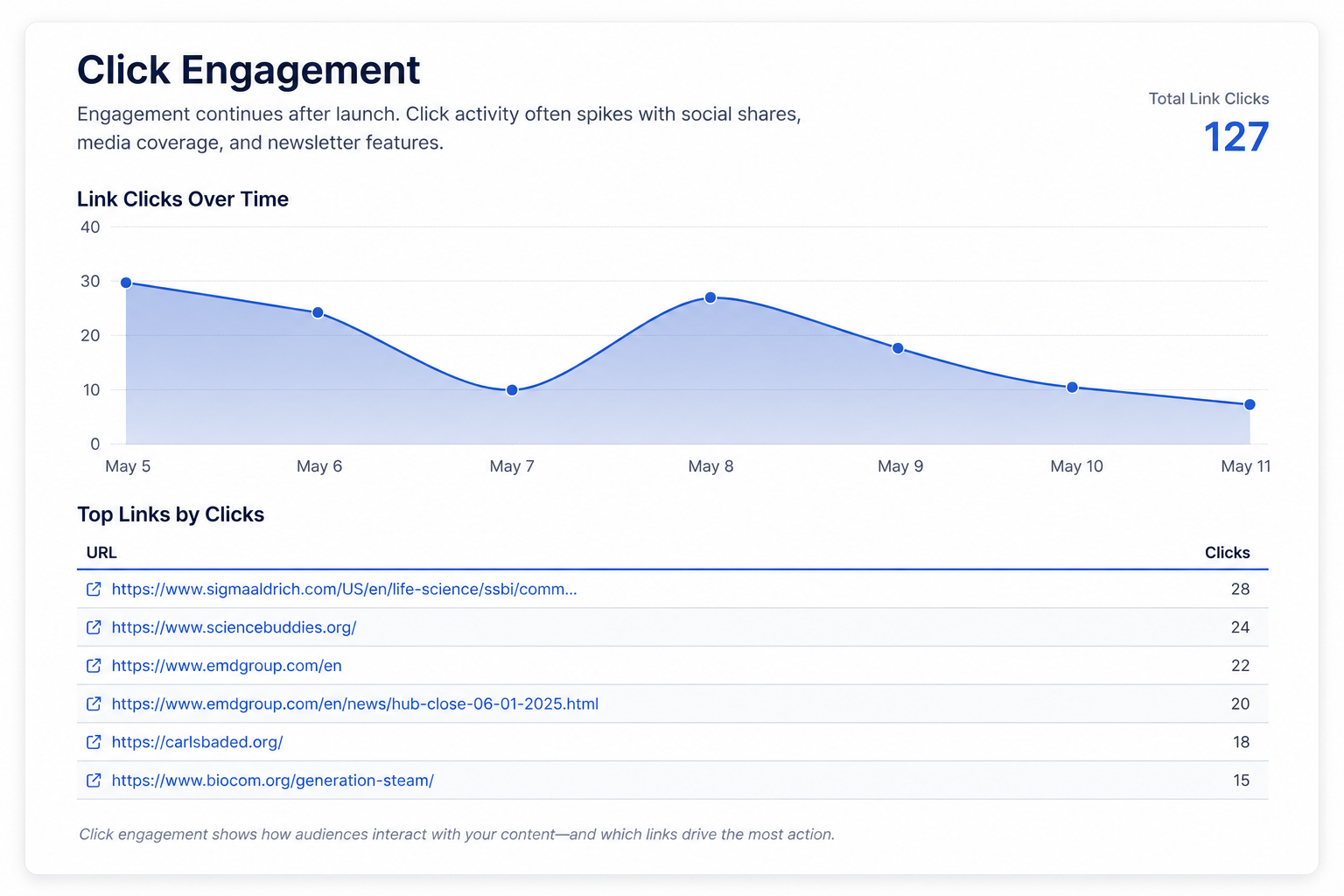
Engagement patterns often continue for days after launch, especially when releases are actively reshared across social and media channels.
This is where post-launch optimization becomes powerful.
A single executive LinkedIn post, partner repost, or newsletter mention can create measurable spikes in referral traffic and engagement days after publication.
The more communications teams understand these patterns, the easier it becomes to improve future campaigns and demonstrate measurable PR impact.
“Modern press releases should be measured like performance campaigns — not static announcements.”
AI Visibility Is Becoming a New PR Metric
News releases are no longer only being discovered by journalists and search engines.
AI systems are increasingly crawling, indexing, training on, and grounding against published newsroom content.
That means your releases may now influence:
- AI-generated answers,
- research workflows,
- search experiences,
- and long-term brand visibility inside AI systems.
Modern analytics platforms are beginning to surface:
- AI crawler activity,
- model attribution,
- training impressions,
- and grounding behavior.
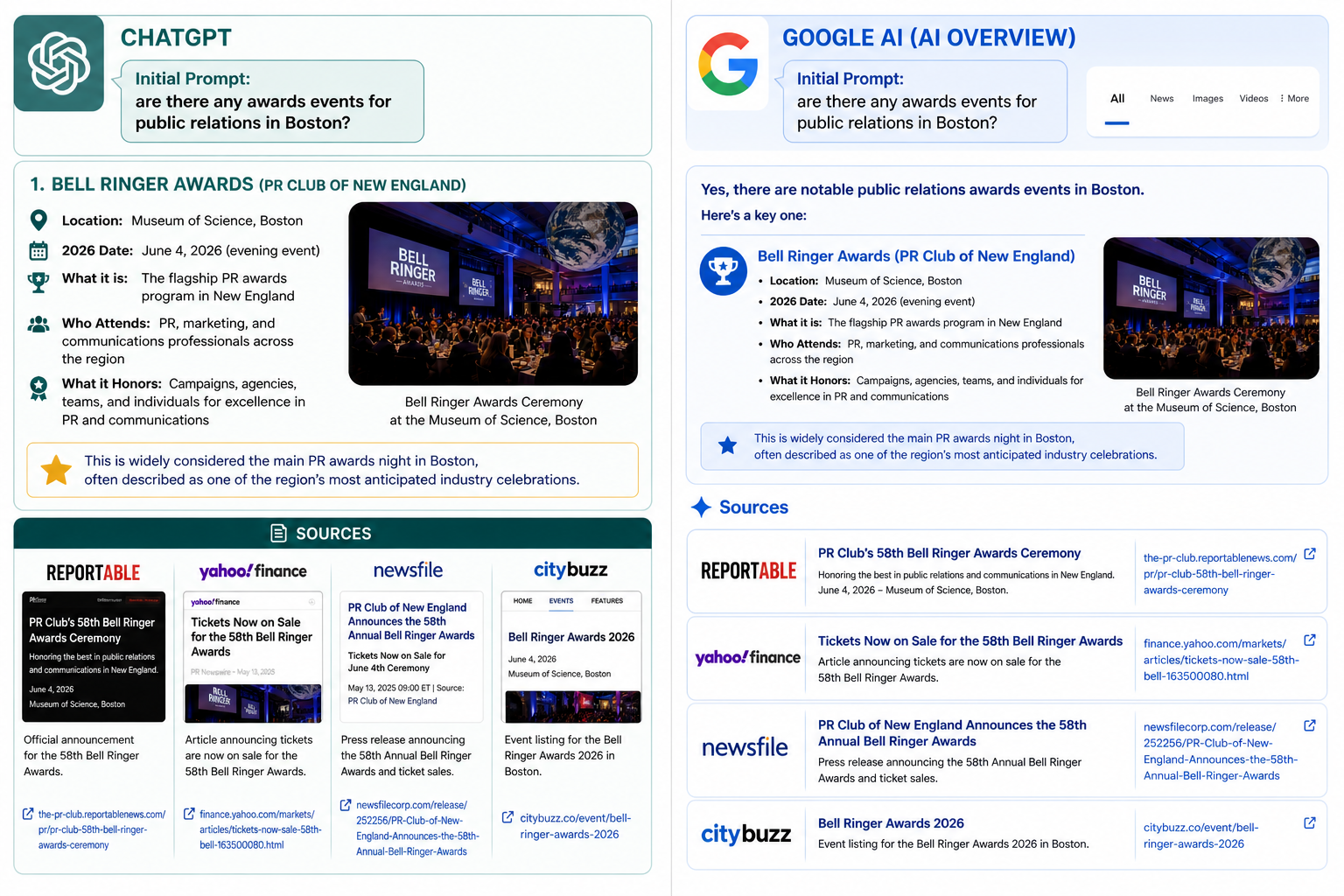
AI systems are increasingly crawling, indexing, and referencing newsroom content — creating a new category of communications visibility.
This represents an entirely new layer of communications intelligence.
As AI discovery continues evolving, structured newsroom publishing, consistent metadata, and authoritative content distribution will become even more important.
The companies investing in measurable, accessible, and well-distributed content today will be better positioned for how information is discovered tomorrow.
Publishing Is the Starting Point
The best news releases today are not static announcements.
They are measurable content assets — amplified across social channels, shared through trusted networks, optimized for discoverability, and increasingly surfaced through AI systems.
Publishing is only the beginning.
What happens after launch is what determines whether your announcement simply exists online — or actually reaches the audience it was intended for.